Understanding Nitrogen
Catchment Group:
Project:
Understanding the movement, interactions and monitoring of nutrients, particularly nitrogen through the Edendale catchment
Funding:
$116,312 excl. GST
Period:
Jul 24 - Jun 26
Project Description
The Edendale Aquifer Group’s nitrogen mitigation project was a catchment-scale initiative to better understand nitrogen movement through the Edendale catchment and identify practical, economically viable solutions to reduce nitrogen losses to groundwater, streams and the Mataura River.
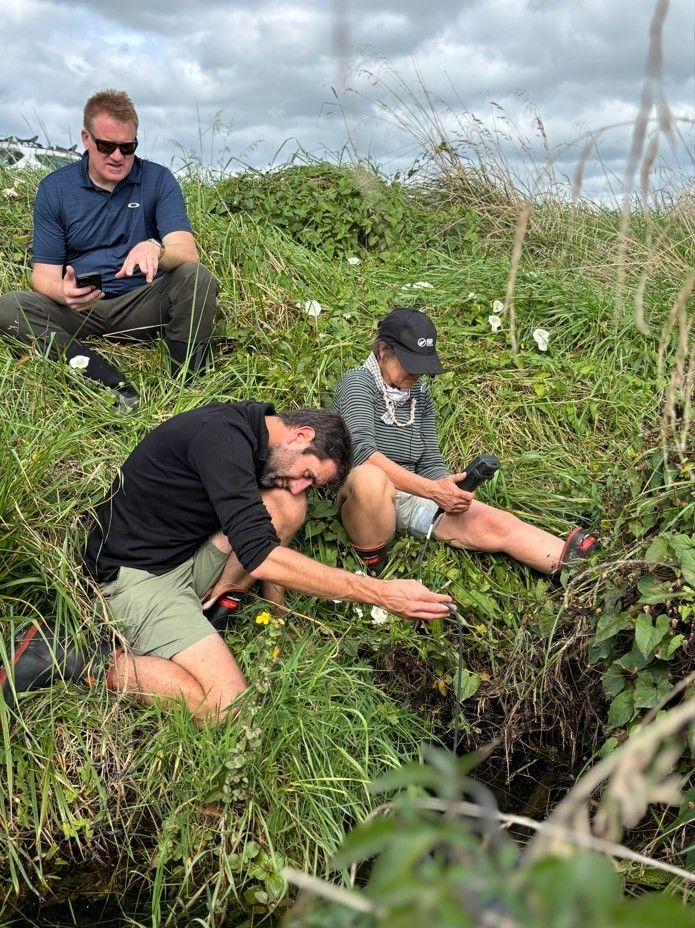
The project combined scientific research, farm-system modelling, water quality monitoring and edge-of-field mitigation trials, with a particular focus on the 42 km Edendale Terrace, where natural seeps and springs can transport nitrate-rich water into waterways and the aquifer. Key activities included developing a nitrate prioritisation tool, completing DairyNZ farm-system case studies, investigating and establishing pilot wetlands, improving understanding of local hydrology and water quality, and working with farmers to identify future mitigation opportunities.
Led by the Edendale Aquifer Group, the project brought together local farmers, landowners, researchers, industry organisations and agencies, including DairyNZ, Fonterra, Environment Southland, Land and Water Science and Thriving Southland. The collaboration aimed to develop a shared understanding of nitrogen leaching challenges in the catchment and explore both source-based and edge-of-field mitigation options to improve water quality.
Objectives
The key objectives of the project were to:
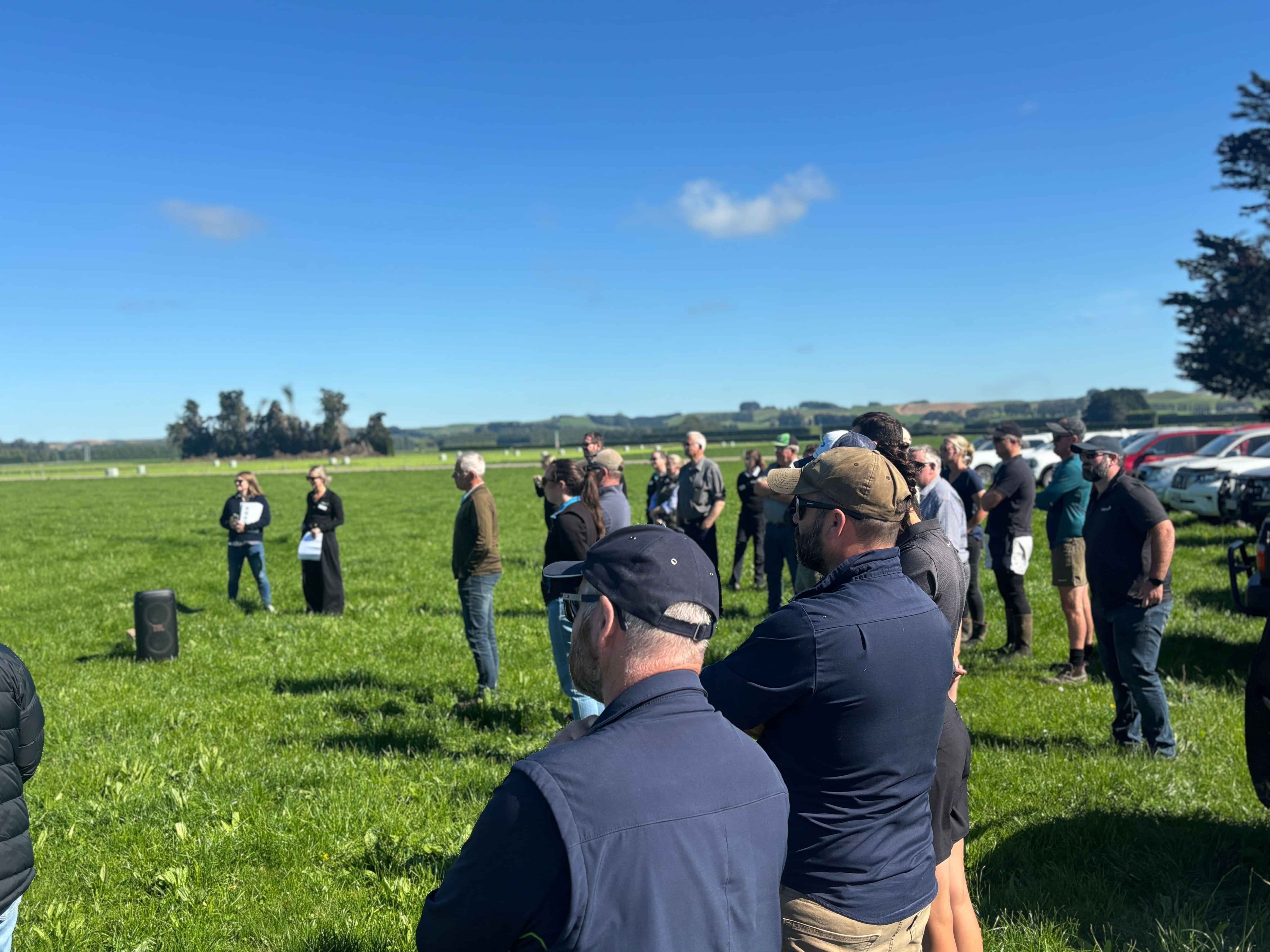
Build community understanding of the local aquifer, waterways and nitrogen cycle.
Improve understanding of how nitrogen moves through the Edendale catchment and identify areas of greatest risk and opportunity.
Develop practical farm-system options for reducing nitrogen losses at source.
Explore combinations of nitrogen mitigation strategies that can work within different farm systems while maintaining farm productivity and profitability.
Investigate the potential for wetlands and other edge-of-field mitigations to intercept and treat nitrogen-rich water.
Develop and test pilot wetland projects along the Edendale Terrace.
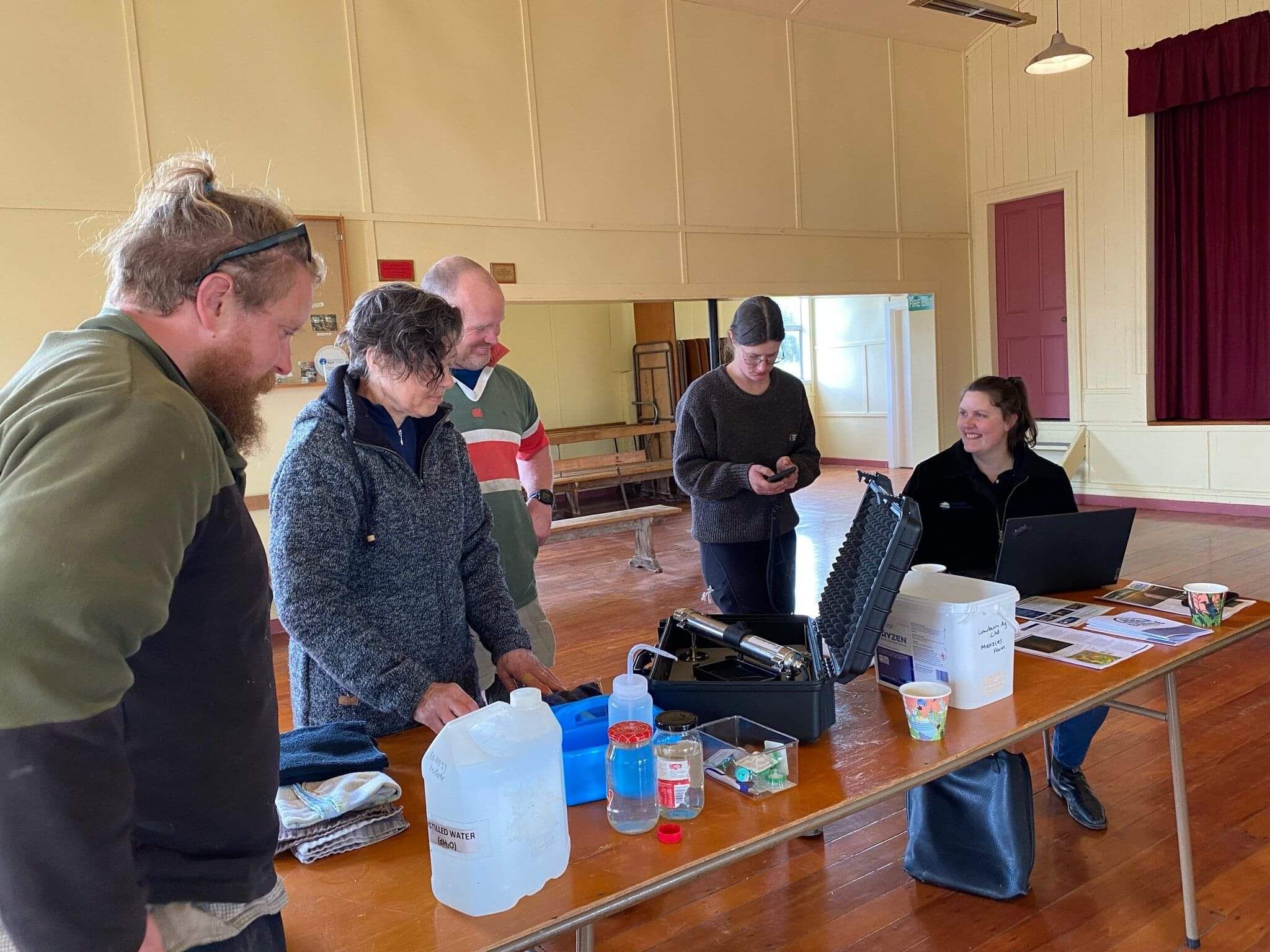
Improve the catchment’s water quality monitoring and evidence base.
Develop a practical tool to help prioritise areas for future nitrogen mitigation.
Build relationships, knowledge and capability within the local farming community to support future action.
Outcomes
The project has moved the Edendale Aquifer Group from an initial focus on understanding the problem to having practical tools, local examples and a clearer pathway towards implementation.
Improved catchment understanding
The project has significantly increased the Group’s understanding of the hydrology, landscape and nitrogen pathways across the Edendale Terrace. This work has helped identify areas where nitrate-rich water may be moving through natural flow paths and where targeted mitigation could provide the greatest benefit.
Nitrate prioritisation tool developed
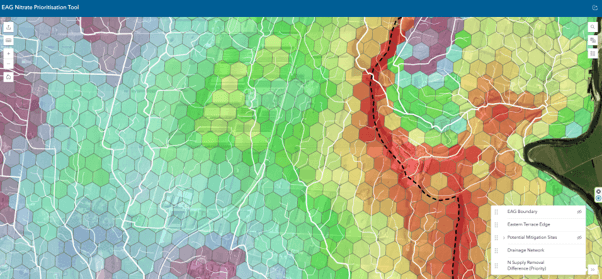
Land and Water Science has developed a nitrate prioritisation tool for the catchment. The tool brings together information about the landscape and water movement to help identify potential nitrogen hotspots and prioritise areas for future investigation and mitigation.
This provides the Group with a practical, catchment-scale tool to help guide future investment rather than relying on a one-size-fits-all approach.
Local farm-system case studies
DairyNZ worked with local farms to develop case studies using Overseer and Farmax to investigate different nitrogen mitigation options.
The work explored how a range of measures could be combined into practical "mitigation bundles", including changes to fertiliser management, stocking rates, plant species and other farm-system practices.
The case studies considered both environmental outcomes and the economic implications for farm businesses, helping demonstrate that nitrogen mitigation needs to be practical and appropriate for individual farming systems.
Two pilot wetlands established
Two pilot wetland projects have been progressed along the Edendale Terrace, providing valuable practical experience in wetland design, construction and implementation.
The sites have tested different approaches, including enhancement of an existing duck pond and a wetland incorporating a woodchip bioreactor.
The pilot projects have also provided important learning around consenting and working with Environment Southland. While some aspects of the consenting pathway remain uncertain, the experience has given the Group a much better understanding of the technical, regulatory and practical considerations involved in future wetland development.
The pilots have also created demonstration sites that can be used for future farmer learning and extension.
Overall outcome
The project has built a stronger understanding of the Edendale catchment and created a practical connection between science, farm management and targeted edge-of-field action.
The Group now has local case studies, pilot wetlands, a nitrate prioritisation tool, stronger partnerships and a clearer pathway for future investment and implementation.
Nitrate Prioritisation Tool
Edendale Aquifer Group have undertaken a science project to highlight how nitrates move through the catchment and where mitigation actions can be taken. This included the creation of a free tool for farmers within the catchment to use!
Access the informative Story Map to learn:
how landscape features affect where nitrogen will accumulate,
how the accumulation of nitrates impact on the nitrate load in the groundwater,
where the highest priority areas might be located, particularly along the Edendale Terrace, to maximise the potential to remove nitrogen from the water.
Then check out the Nitrate Prioritisation Map Tool to see how you can mitigate nitrates on your property! Make sure you use the “layers” to find the “Trap and Treat” tool, an exciting piece of science using the latest high resolution imagery to identify key areas for nitrate mitigation.
Contact office@thrivingsouthland.co.nz to access the project story map and get the link to the map tool

Thriving Southland is a community-led group with a vision to create a prosperous Southland, healthy people, healthy environment from the mountains to the sea.
View Privacy Policy HERE
CONTACT US
25 Don Street,
Invercargill 9810