Edendale Aquifer
The Edendale Aquifer Group, formed in 2024 as part of the Three Rivers Catchment Group, supports local communities to connect, learn, and adopt practical, sustainable environmental practices. We’re focused on finding real solutions that protect both our water and our land.

Your Catchment
Group Coordinators
Tessa Miller
021 400 431
tessa@thrivingsouthland.co.nz
Benita MacLean
021 399 343
benita@thrivingsouthland.co.nz
Catchment Group Contact
Tim McRae
027 240 2592
Edendaleaquifergroup@gmail.com
About Us
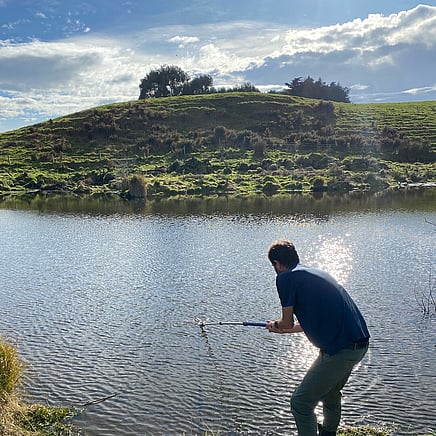
The Edendale Aquifer Group (EAG) formed in 2024 as part of the Three Rivers Catchment Group to tackle high nitrate levels in the local aquifer and Mataura River. These challenges stem from seepages along the 42km Edendale Terrace, where shallow soils and complex hydrology make nitrogen management difficult. The group is made up of local people focused on practical, evidence-based solutions. Current work includes water testing, modelling different “stacked” mitigation options for farm inputs (such as fertiliser changes, stocking rate adjustments, and use of plantain), and investigating edge-of-field mitigations like wetlands to treat seepage before it enters the river. EAG also runs community events to share knowledge and tools. With strong support from industry and science partners, the group is actively working to improve water quality and protect the long-term health of the catchment.
Catchment Area
The Edendale Catchment is approximately 24,000 ha, spreading over both sides of the Mataura River. The catchment is a mixture of dairy, sheep and beef, and dairy grazing, along with some major industry landholdings, and two townships.
Meetings
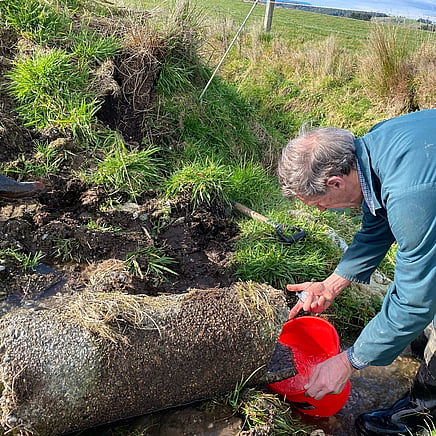
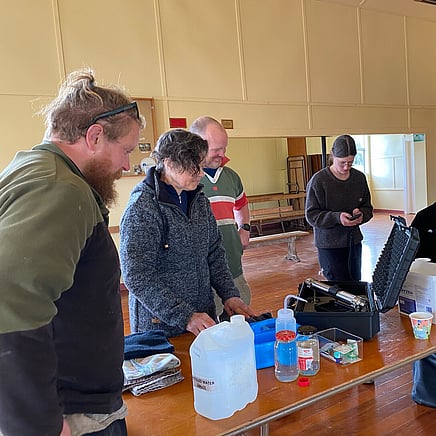
Join us for our monthly nitrate water testing sessions:
When: The 3rd Friday of each month
Time: Drop in anytime between 12–1 pm
Details: Follow the Edendale Aquifer Group on Facebook for the latest testing dates and locations
Recent Events
The Group have been very active, and have hosted a range of events, workshops and webinars. One event they are very proud of was a co-hosted field day in early 2025, with DairyNZ. The field day brought together over 60 farmers, rural professionals and community members. The day was practical and farmer-led, with case studies developed by DairyNZ, with insights from Miranda Hunter, on local farming families and businesses. Each case study family shared what they’re trying on-farm to reduce nitrogen losses, and the trade-offs that come with different options.
The case studies showed that there’s no single silver bullet, but a “stack” of smaller actions works best. Lower fertiliser use, smarter effluent management, wintering changes, and adding plantain all help to bring nitrogen losses down, while keeping farms profitable.
One of the highlights was a session on plantain. Plantain in pastures has been shown to lower nitrogen losses by reducing the amount of nitrate in urine and slowing down how quickly it moves through the soil. The numbers are encouraging:
When plantain makes up about 10% of a pasture, nitrogen losses can drop by around 7%
When plantain reaches about 20% of a pasture, the reduction can be around 14%
Establishment tips: sow 3–4 kg/ha with new pasture mixes or add 3–4 kg/ha by direct-drilling/oversowing into existing pasture, and around 5 kg/ha if broadcasting. Pairing plantain with smarter fertiliser use is one of the simplest, most cost-effective ways to reduce losses.
Projects
Edendale Aquifer Group Understanding Nitrogen | Foundation Project
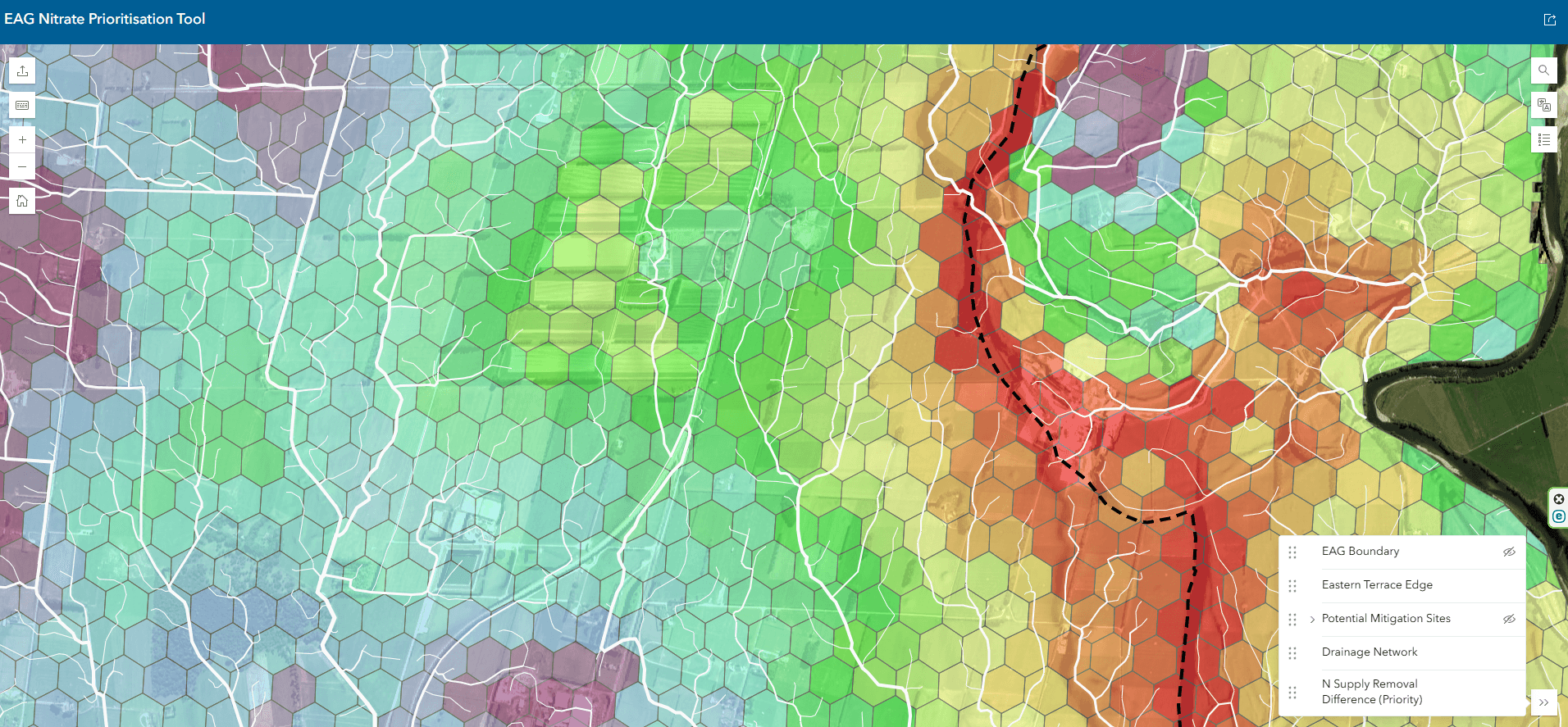
Edendale Aquifer Group have undertaken a science project to highlight how nitrates move through the catchment and where mitigation actions can be taken. This included the creation of a free tool for farmers within the catchment to use!
Access the informative Story Map to learn:
how landscape features affect where nitrogen will accumulate,
how the accumulation of nitrates impact on the nitrate load in the groundwater,
where the highest priority areas might be located, particularly along the Edendale Terrace, to maximise the potential to remove nitrogen from the water.
Then check out the Nitrate Prioritisation Map Tool to see how you can mitigate nitrates on your property! Make sure you use the “layers” to find the “Trap and Treat” tool, an exciting piece of science using the latest high resolution imagery to identify key areas for nitrate mitigation.
Access to the project story map will be available shortly. Please contact office@thrivingsouthland.co.nz for more information.

Thriving Southland is a community-led group with a vision to create a prosperous Southland, healthy people, healthy environment from the mountains to the sea.
View Privacy Policy HERE
CONTACT US
25 Don Street,
Invercargill 9810