Your Catchment Group Coordinators
Benita MacLean
021 399 343
benita@thrivingsouthland.co.nz
Tessa Miller
021 400 431
tessa@thrivingsouthland.co.nz
Catchment Group Contact
Brendon Stevens
027 202 5788
wainuist@gmail.com
Watch this video to learn more about the Catchment Group
Thanks to Environment Southland for creating this.
About Us
The Balfour Catchment Group started in 2020, when a group of local farmers and landowners got together to tackle environmental challenges in the Balfour area. The group includes sheep, beef, dairy, deer, arable and horticulture farmers, all working together to find practical ways to look after land and water while keeping farming sustainable and productive.
Catchment Area
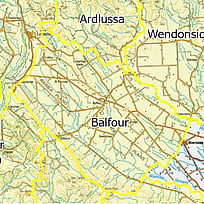
The Group covers the Balfour catchment, around 17,000 hectares, including 18 farms and the Mandeville township. Water from the area drains into the Otamita Stream and then into the Mataura River. The topography is mostly steep to rolling, and uniquely spans one physiographic zone – Bedrock/Hill Country.
Recent Events
Balfour Fan Study
The Balfour Catchment Group completed a study with Land & Water Science to pinpoint the sites where groundwater nitrate is discharging into the Waimea and Longridge streams. The study focused on the Balfour Fan, a unique part of the catchment with shallow groundwater and a network of open and tile drains that carry nutrients like nitrogen, phosphorus, and sediment into local waterways.
Findings show that groundwater typically takes 3–4 years to travel from the centre of the fan to the streams, meaning changes on farms can have noticeable results relatively quickly. The study identified two key challenges: managing episodic runoff from the hill country and controlling nutrient movement through the fan.
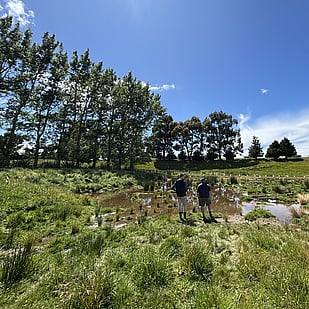
Mitigation efforts including wetlands, riparian plantings, and woodchip bioreactors were designed to slow surface water, reduce nitrate concentrations, and trap sediment. Even small reductions in nutrient levels can make a big difference for water quality, fish health, and the wider environment.
Projects
On‑Farm Environmental Actions
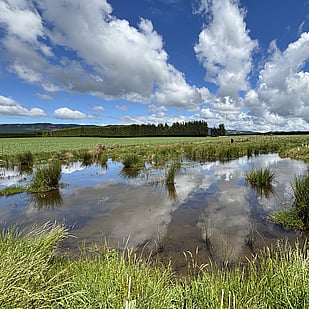
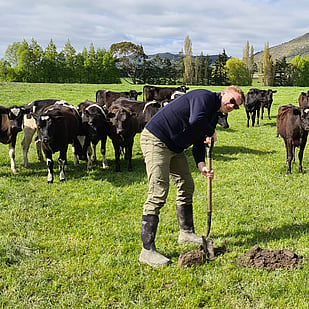
One of the biggest focuses for the Balfour Catchment Group has been helping farmers put practical environmental solutions in place on their own properties as part of The Waimea Project. Members have been rolling out constructed wetlands and woodchip bioreactors to help slow runoff and reduce nitrate loss to waterways — all while keeping farming productive. For example, on one arable farm a large wetland was built with sediment traps and baffles so water slows and filters through before leaving the property, and on another, a subsurface woodchip bioreactor uses wood chips to help bacteria break down nitrates as water passes through. Members have also been planting in riparian seepage areas, and at another site a terraced wetland is being developed in a gully fed by tile drains. Farmers describe these efforts as “future‑proofing” their land and water quality for the generations to come.
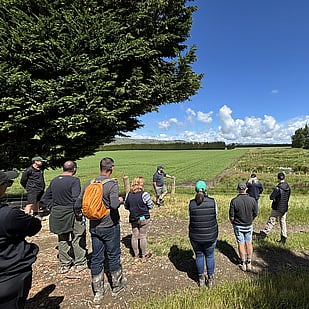
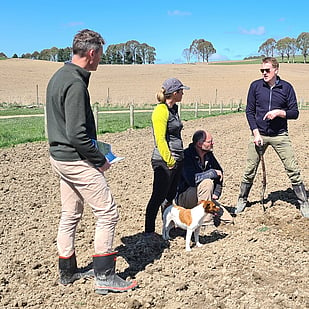
Across the catchment, these installations have been supported by field days and shared learning events where nearly 50 people came together to see the work firsthand and talk through how the structures operate and what they hope they’ll achieve over time.

Thriving Southland is a community-led group with a vision to create a prosperous Southland, healthy people, healthy environment from the mountains to the sea.
View Privacy Policy HERE
CONTACT US
25 Don Street,
Invercargill 9810