It’s been a pretty decent start to autumn (fingers crossed) as we get some of the sun we were deprived of over summer. With Easter approaching, it’s a great chance to reflect on what’s been a busy time for Southland Catchment Groups.
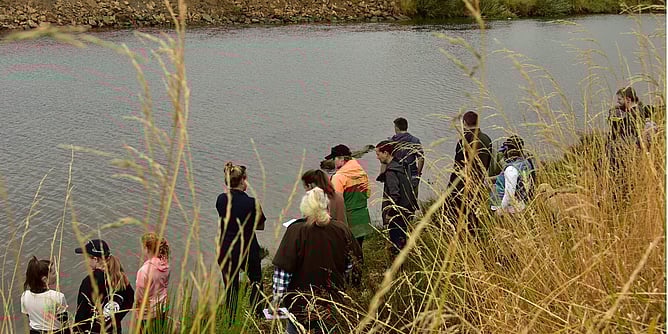
Getting young people excited about the rural sector is hugely important, and during March the Waihōpai Catchment Group helped Southland Girls’ High School Year 13 Ag students out with an assignment.
It was also fantastic to see the ACE team getting together to think about the next step for the Group, focusing on which activities and projects will help turn their shared vision into reality, and set the direction for their work in the years ahead.
Meanwhile, our very own Stacey Stuart got to check out The Muster in Tokanui, which was a great opportunity to connect with rural women from across the country and share some of the science that can help us understand the health of our waterways.
Over to the west, the Mid Aparima Catchment Group has been exploring how they can make better use of the water quality data collected across their catchment, and how to turn that information into a clear, engaging story for the wider community. Further up, the Upper Aparima Catchment Group met to map out the next steps in their possum control programme.
Finally, congratulations to the Awarua Catchment Group on holding their first meeting.
There is so much momentum in these projects, and it’s exciting to see them making a real difference on the ground.
More on all these stories below, and much more! Have a great Easter.
News
Murihiku Rūnaka and Rio Tinto/NZAS Community Development Fund
This funding opportunity is open to Southland organisations, to support projects across four areas:
diversity, equity and wellbeing;
culture, heritage and environment;
education, innovation and workforce development;
economic and climate transition.
Find out if your project qualifies and get your application in before the deadline on 4pm, Wednesday 15 April 2026.
Click here to learn more.
DOC Community Fund – Pūtea Tautiaki Hapori
A $9.2 million nationwide funding pool is now available for community groups, private landowners and iwi protecting our threatened species and ecosystems. The fund will open for applications from Tuesday 31 March until 5pm, Thursday 30 April. Funding decisions are expected to be announced in July 2026, with projects expected to start in September.
Click here to learn more.
Board Member Profile: Simon Saunders – Vice Chair
Simon, together with his wife Annabel and their three children, Fred, Digby and Xanthe, farm Stag Valley, a 1,400ha (10,000su) sheep, beef, dairy heifer grazing and forestry property just west of Lumsden in Northern Southland. At Stag Valley, there is a strong focus on adding value to all food and fibre produced. The farm finishes approximately 6,000 lambs into the Lumina Lamb programme and manages the Headwaters Genetics sheep flock, selling more than 1,000 ram hoggets to Headwaters, which provide the genetics for Lumina Lamb.
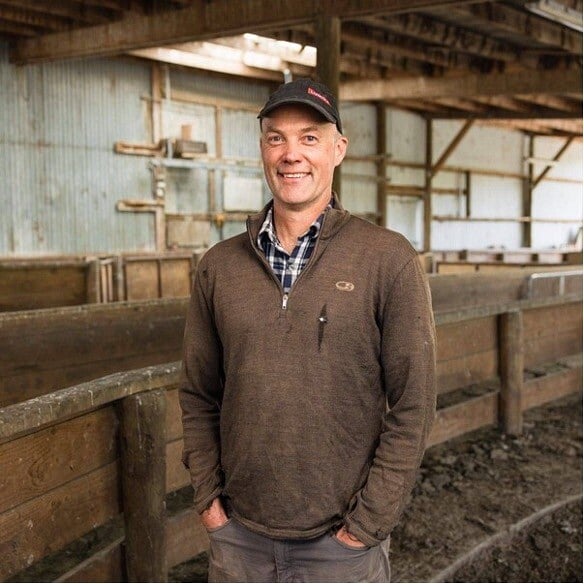
Environmental stewardship is a key priority on the farm. Three QEII covenants have been established, with ongoing work to plant and fence waterways and minimise sediment loss. A 3ha wetland is currently being developed as part of a Between the Domes Catchment Group project. The family are active members of both the Between the Domes and Dipton Catchment Groups, with Simon being elected to the Thriving Southland Board in 2024.
Recent Events
Wendon Catchment Group – Wintering Tour
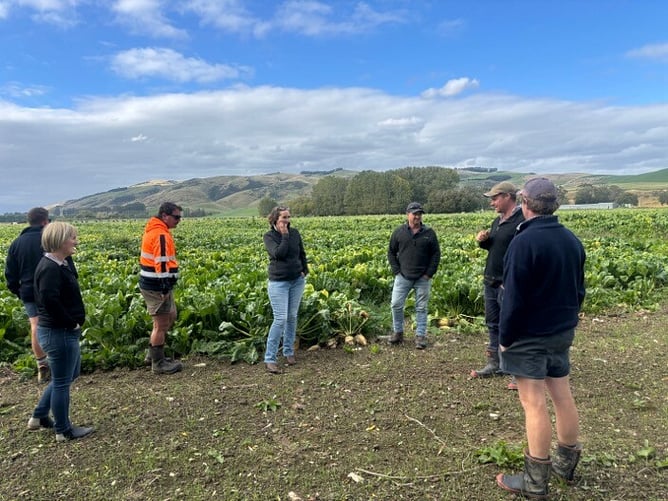
The Wendon Catchment Group recently held a Pre-Wintering Tour, visiting three farms across the catchment. Members heard from Ayla Lucas of Landpro's Farm Environment Team, who shared her expertise on key concepts such as swales, gullies and Critical Source Areas.
Discussions ranged from practical grazing strategies to the environmental impacts of winter grazing and the incoming Farm Environment Planning regulations, giving members plenty to take back to their own farms.
The use of wearable technology during winter was another hot topic. Results across the catchment have been mixed so far, but with the agri-tech sector moving at pace, the Group is watching this space with interest to see how these tools develop over the coming seasons.
Manawatu River Catchment Collective Field Trip
A small group from Southland recently headed north to Manawatū to swap notes with local Catchment Groups and came back with plenty of food for thought. Tim McRae from the Edendale Aquifer Group and Allan Marshall from the Waikawa Catchment Group joined the visit, which was coordinated by Gwyn Jones and took in some of the on-the-groundwork the Manawatū River Catchment Collective has been developing.
The first stop was James and Kate McKay's property in the Ihuraua–Upper Tiraumea Catchment, where a four-hectare wetland planting project is helping slow water movement and reduce sediment reaching the Manawatū River. One thing that struck our visitors was how quickly native vegetation establishes in the North Island climate, around a meter of growth per year. It was a timely reminder that riparian planting remains one of the most effective tools we have for capturing nutrients before they leave the farm, regardless of which island you are on.
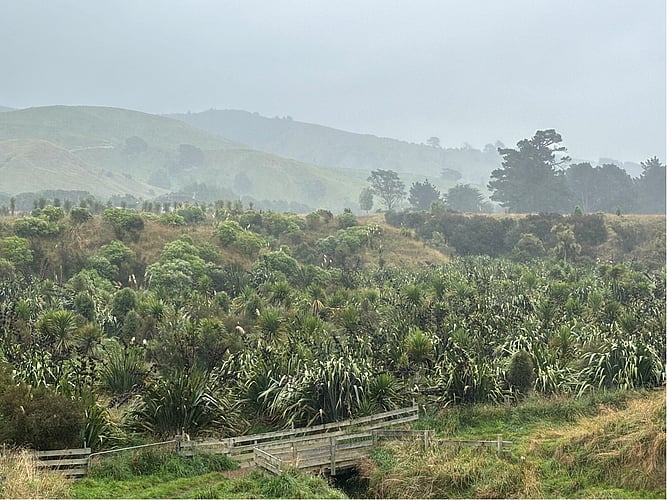
That evening, the Catchment Group's AGM showcased seven years of water quality monitoring results and the patterns were familiar, with geology, soil type and hydrology all playing a strong role alongside land use.
The second day brought visits to two practical and cost-effective interventions. A retrofitted detainment bund in Mangaone West built for around $7,000 with MPI mapping support, which is slowing water flow during rainfall events and significantly reducing sediment loss from the catchment. It's the kind of targeted, low-cost solution that could have real relevance in parts of Southland. The group also visited a woodchip bioreactor as part of the Catchment Solutions Project. Water passes through woodchip-filled trenches over 16 hours, where bacteria convert nitrate into harmless nitrogen gas, a process called denitrification. This particular system is running at 82% efficiency and has already removed around 53 kilograms of nitrogen from the waterway.
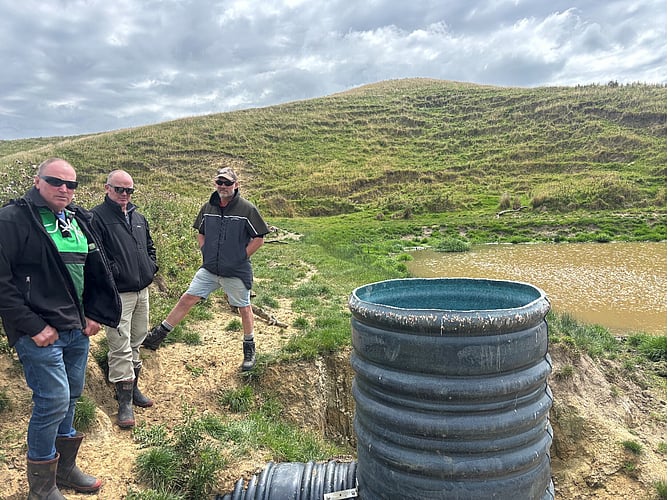
As Allan reflected, what made the trip so worthwhile was the chance to talk directly with farmers and understand why certain mitigations had been chosen, not just what they were doing, but how it fitted their landscape. Many of the solutions were relatively simple but clearly effective, and easy to relate back to Southland systems. Exchanges like this are a reminder of how much catchment groups across the motu have in common, and how much we can learn from each other. A big thanks to all the Manawatū farmer hosts who opened up their properties and shared their experiences so generously.
Awarua Catchment Group Hosts First Community Meeting
The Awarua Catchment Group held its first meeting with an excellent turnout despite the classic “four seasons in one day” Southland evening.
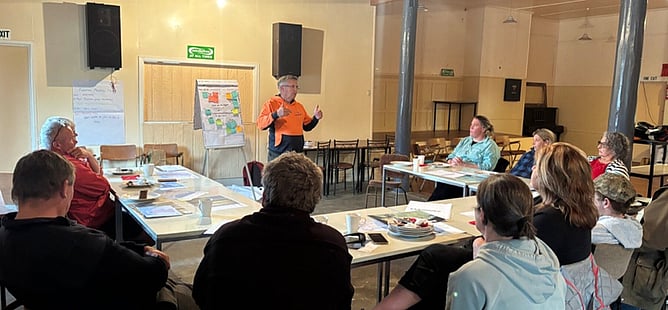
The Group spent time exploring the key issues facing the area, with water quality and pest animals identified as two of the most immediate concerns, and the link between them.
The Bluff Hill Motupōhue Environment Trust also joined the meeting, outlining their expanded pest control work and expressing interest in collaborating. The Group’s next steps will involve shaping a project that reflects the priorities raised during the night.
Loving our Lora Gorge Community Restoration Area
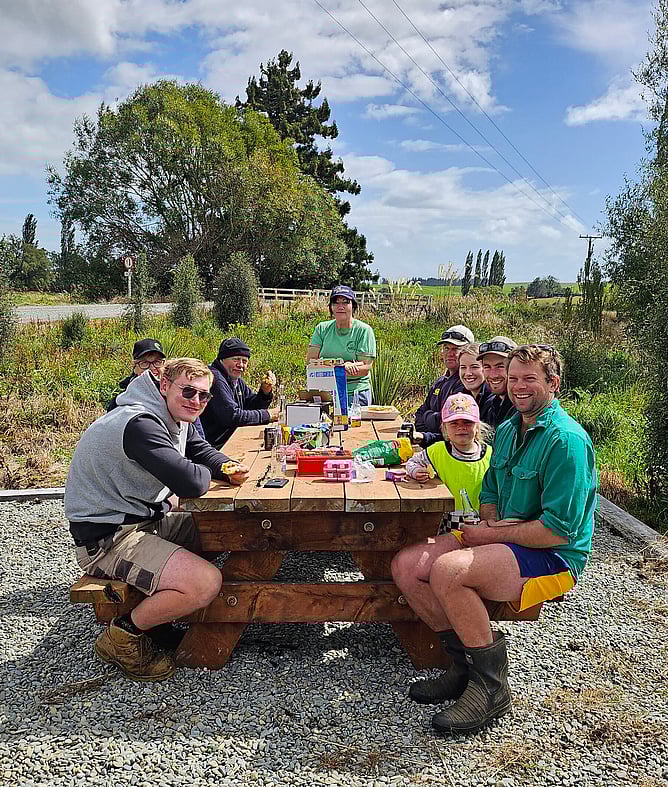
A sunny Sunday working bee saw our volunteers tackle the community restoration area beside the Makarewa River in the Lora Gorge, weed whackers, gloves, and rakes in hand. We wrapped up with cold drinks, home baking, and plenty of good conversation.
These gatherings are as much about community as they are about conservation. We are steadily improving this special spot, adding a path, picnic table, and more plants as time and funds allow, and we are grateful to the Westpac Watercare grant for making it all possible.
ACE Reflects on Progress and Looks Ahead
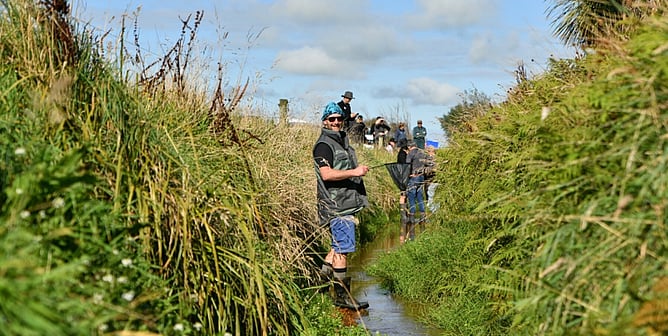
ACE members met in late February to reflect on the Group’s achievements and discuss what the next decade could look like for the catchment community. Members shared strong pride in the activities that have shaped ACE’s identity, including stream walks, water testing, eDNA and fish sampling. These hands-on activities helped locals see what life exists in their waterways and understand why environmental work matters, as well as bring the whole community together. Everyone agreed ACE has contributed to some of the biggest shifts in on-farm practice, including:
Improved winter grazing and awareness of critical source areas
More intentional cultivation and grazing decisions
Widespread adoption of CSA management
Stronger environmental awareness after seeing life in local streams
A clearer picture of what good practice looks like across the catchment
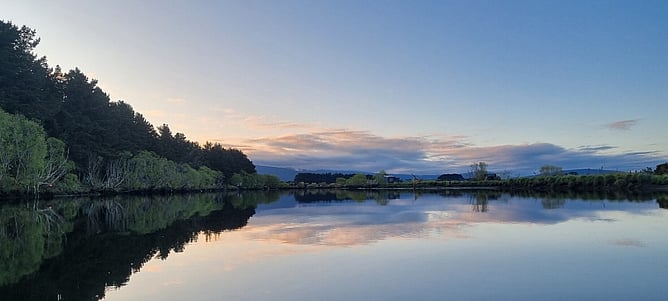
The Group painted a clear and ambitious future vision:
A strong, resilient community
ACE acting as a central hub that connects farmers, agencies, iwi, and urban residents
Wider membership and engagement, building pride and belonging
Better use of data and monitoring, with simple visuals and regular updates
The session also highlighted ACE’s identity: a trusted, community-led group known for practical, on-the-ground action and positive storytelling about progress across the catchment.
The next step for the group will focus on which activities and projects will help turn this shared vision into reality and set the direction for ACE’s work in the years ahead.
Exploring Waterway Life at the Shepherdess Muster
Catchment Coordinator Stacey Stuart joined the Shepherdess Muster in Tokanui, sharing the science behind stream health monitoring with rural women from across the country. The session explored what lives in our waterways, even the smallest streams and the practical tools communities can use to keep an eye on them.
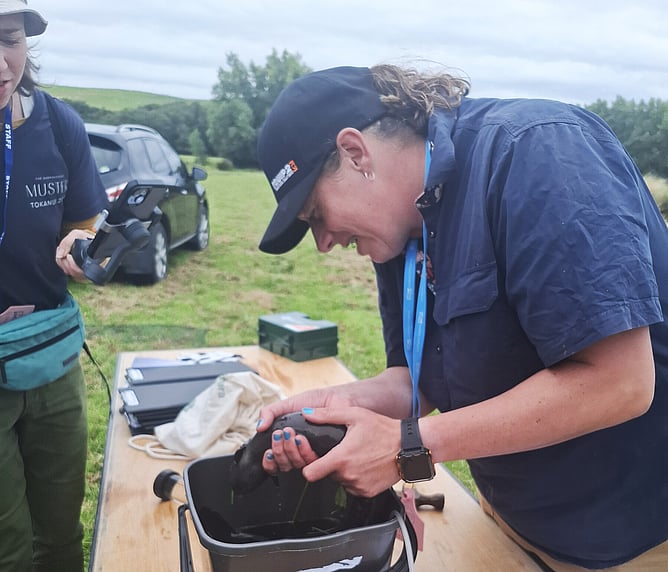
Thriving’s Stacey Stuart Checks Out an Eel
A highlight? A large longfin eel pulled from the stream below the Tokanui rugby fields, always a crowd-stopper! The Titiroa Catchment Group are also using environmental DNA (eDNA) to better understand their waterways, with results coming soon so watch this space.
Thanks to the Shepherdess team for a fantastic event, and to everyone who came along.
Seed Collecting Success for Mid Ōreti
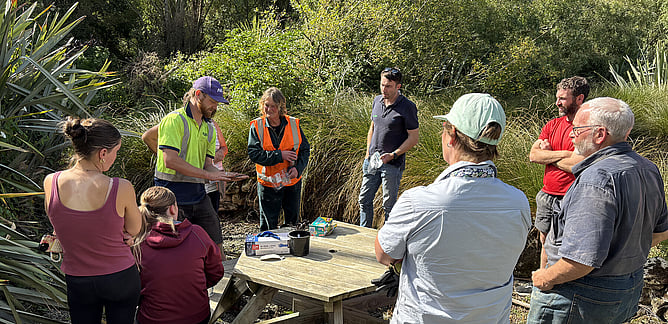
Mid Ōreti held their annual summer seed event at the AB Lime wetland in early March and what a great evening it was! The drop-in session gave people the chance to collect flax, sedge, toetoe, koromiko, and mānuka, with Brad on hand to explain how to collect, store, and process each seed. A quick trip down to the nursery wrapped things up with a practical sowing demonstration, and everyone headed home with seeds ready to go.
Part of the Mid Ōreti Mini Forest Movement, we are hoping to run a bush seed-collecting session over the coming months too, watch this space!
Bringing AquaWatch, Southland Girls’ High School and the Waihōpai Catchment Group Together
The Waihōpai Catchment Group recently visited Southland Girls' High School to help Year 13 Ag students with an assignment on water quality monitoring. Eoin, Kelly-Anne, and Sarah shared the Group's journey since 2019 – field days, workshops, projects, and events along with water quality data collected from two AquaWatch waka positioned above and below Woodlands between May and October 2025.
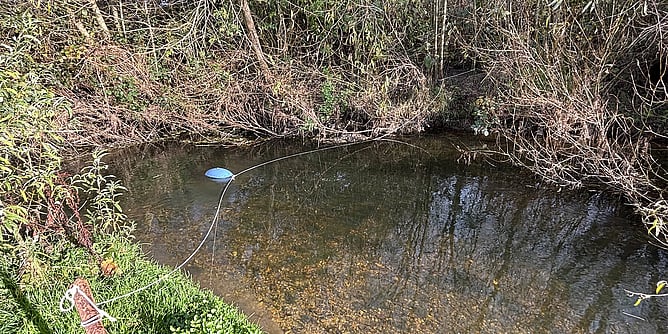
The AquaWatch in action
The waka continuously measured temperature, pH, dissolved oxygen, conductivity, and turbidity, on loan from the Reimagining the Mataura Project. The students loved the large Waihōpai map and had plenty of great questions and ideas for future catchment actions. We hope the assignments go well!
The school has an active Young Farmers Club available for practical help like planting, contact Mel Young at melanie.young@southlandgirls.school.nz with plenty of notice.
A big thanks to Bob for organising strawberry CalciYums through Fonterra, James Dare from AquaWatch for processing and presenting the data, and Eoin and Kelly-Anne for sharing their expertise.
Mid Aparima Catchment Group Explores New Ways to Share the Story of Their Waterways
During March, members of the Mid Aparima Catchment Group met to explore how they can make better use of the water quality data being collected across their catchment and how to turn that information into a clear, engaging story for the wider community.
The discussion centred on one big theme: helping people understand what’s happening in their waterways, why it matters, and how on-farm actions are making a difference.
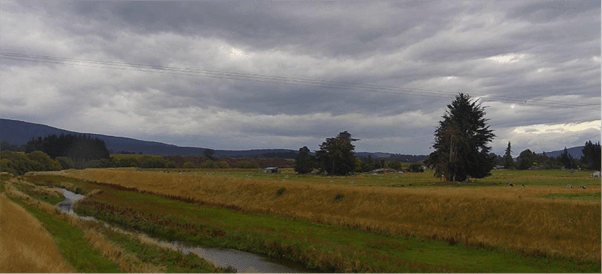
The committee identified options for:
Interpretive signage along the river walk
A real-time water quality sensor
Exploring community water quality infrastructure – drawing on learnings from the ECOdetection sensors located in the Otautau Stream thanks to Fonterra. The aim is to build a clear picture of what’s involved so that other catchment groups can use the findings as a starting point if they decide to go down the same path.
The committee will continue refining these ideas over the coming weeks as they explore practical options and next steps.
Upper Aparima Advances Possum Control Efforts With New Collaborative Approach
The Upper Aparima Catchment Group met recently to map out the next steps in their possum control programme and strengthen partnerships to increase the impact of their work. The Group is enthusiastic about progressing what could become a hybrid possum control area, developed in collaboration with Toby from NZ Conservation Services and the Biosecurity team at Environment Southland.
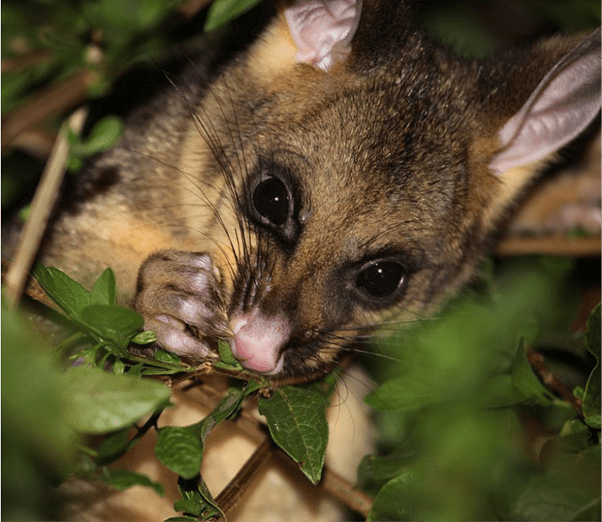
Photo by Christopher Watson
The Group has committed to better understanding the wider effects of pest animals on their community. This includes assessing their Residual Trap Catch (RTC) index to get a clearer measure of possum numbers and control effectiveness, and identifying the impacts possums are having.
Upcoming Events
Mini Forest Movement Native Plant Nursery Drop-In Session
When: 4pm to 6pm (adjusted for Easter & Southland Anniversary on 14 April)
All are welcome to join our monthly native plant growing working-bee evenings at the AB Lime Nursery. This session may include seed collecting, so please keep an eye on the Mid Ōreti Catchment Group Facebook page for any updates. Training is provided, and all ages are welcome. Stay for as little or as long as you like.
Solar Field Day at Fairbanks Farm: Waimatuku Catchment Group
When: Thursday 23 April, 11am (prompt start) to 12 noon,
followed by a BBQ lunch thanks to Rabobank
Where: 1234 Otautau Drummond Road – park next to the dairy shed
Have you been thinking about using solar on your farm and want some inspiration to get started? Come and see a dairy farm run entirely on solar – including fences, pumps, and milk chilling. Find out what they did and why, hear their learnings, and bring your questions. The plan is for a one-hour visit with questions, followed by a BBQ lunch – a great use of a couple of hours.
Health & Safety: Please download the Onside App before arrival and check the farm information for a quick log-in on the day. No children – busy working farm.
Please RSVP to help with catering: sarah@thrivingsouthland.co.nz or call Sarah on 027 588 5200 if you have any questions.
Everything to Gain – What Really Matters: Paddock to Markets
When: 9am to 3pm, 6 May
Where: Ascot Park Hotel, Invercargill
What do global trade negotiations, international climate agreements and changing consumer demand have to do with your farm? Quite a lot.
Everything to Gain: What Really Matters – Paddock to Markets is a new event bringing together leading voices from across trade, policy and agriculture to explore how global forces shape farming in New Zealand.
The free event will connect the big international conversations with the realities of farming in the South.
Facilitated by Kate Scott, the day will feature insights from an experienced panel including farmer and former Agricultural Trade Envoy Hamish Marr, New Zealand Chief Trade Negotiator Vangelis Vitalis, Lincoln University Adjunct Professor Jacqueline Rowarth, MPI Chief Insights Officer Jarred Mair, and Perrin Ag Managing Director Lee Matheson.
Together they’ll unpack a wide range of topics, including:
International trade negotiations and how they influence on-farm policy
Access to global markets beyond China
The intersection of greenhouse gases, tariffs and the Paris Agreement
Changing consumer expectations in global markets
What resilient and viable farm systems could look like in the future.
Most importantly, the event is designed to be a conversation. Attendees will have the opportunity to ask questions and engage directly with the speakers. You can pre-submit your questions when you register.
If you’ve got questions about where global markets are heading and what that could mean for your farm, this is the place to ask them.
Register today at: thrivingsouthland.co.nz/everything-to-gain